Food processing robots are moving into tasks where speed, hygiene, and repeatable motion affect every box that leaves a plant. Their value comes from handling work that is tiring, hard to keep consistent, or difficult to staff for long shifts.
Quick read
- Robots can cut, sort, pick, pack, inspect, and palletize food products.
- Vision systems help robots check position, shape, color, and surface damage.
- People still handle recipes, exceptions, cleaning decisions, and system checks.
Where robots fit
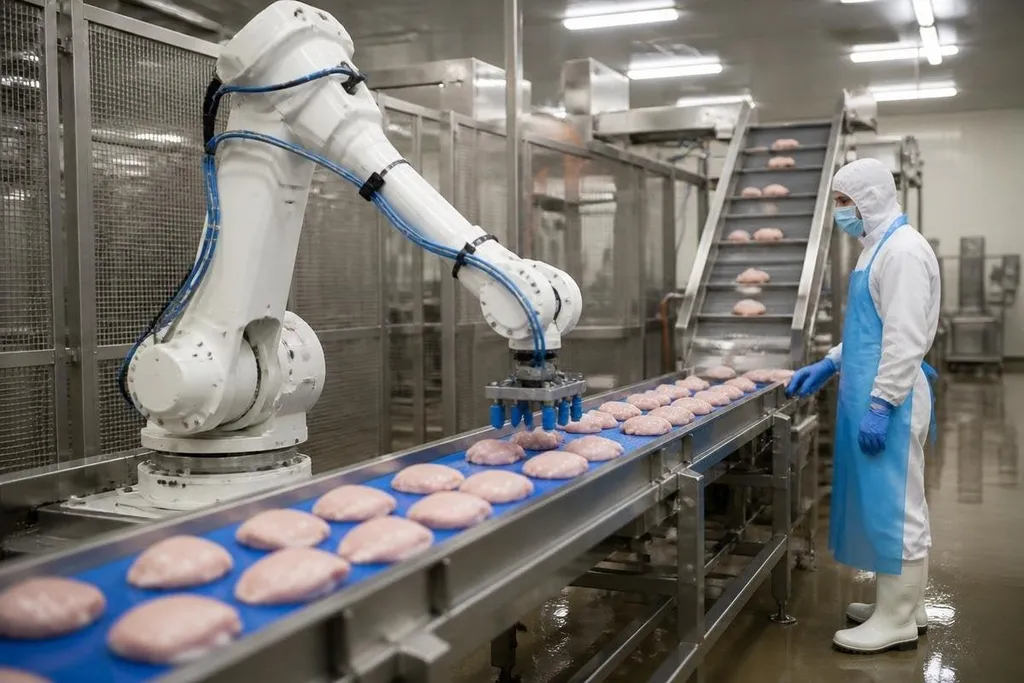
Food plants contain many repeatable jobs. A robot can pick items from a conveyor, place them into trays, close cartons, or move finished cases onto pallets. The task works well when the product arrives in a known position and the robot receives clear instructions.
The end effector, or tool on the robot arm, changes with the job. A gripper may hold a sealed carton, while a vacuum tool can lift a flat package. Food contact parts need materials and surfaces that suit the plant’s cleaning rules, so the tool matters as much as the arm.
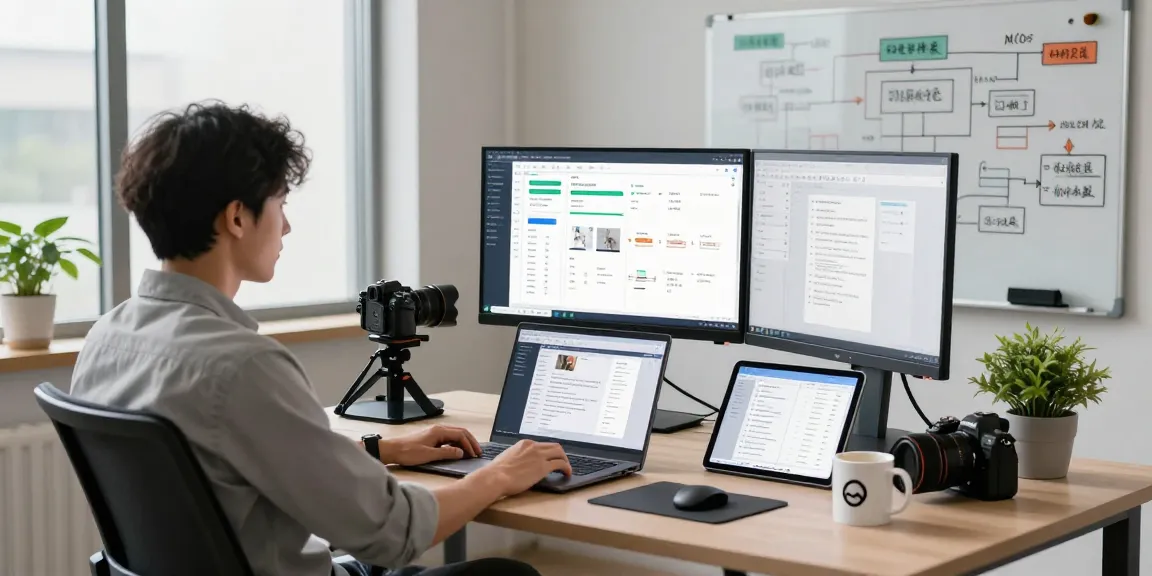
Inspection uses cameras rather than touch. A vision system checks where an item sits and can sort products by size, color, shape, or visible damage. That check can happen while products move along the line, though the plant still needs rules for items the camera cannot classify.
Why hygiene changes the design
Food production puts conditions on robot design that do not apply in a dry warehouse. Water, cleaning chemicals, crumbs, grease, and temperature changes can affect motors, cables, seals, and sensors. A robot placed near a washdown area needs protection suited to that space.
The layout matters too. Open frames and easy-to-clean surfaces leave fewer places for food residue to collect. Cables need careful routing, and tools must come off for cleaning without turning a short task into a long maintenance stop.
Automation can also reduce the number of times people touch sealed products during packing. That does not remove the need for sanitation checks. It changes where staff spend their time and which parts of the line need close attention.
That shift makes the evidence behind each food-processing trial worth checking. Food-processing robotics reporting can connect a machine’s task with its test site, date, sanitation setup, and measured result before the discussion turns to the staff who still handle the line.
The work humans still do
A food robot rarely runs alone. Staff load materials, set product recipes, check tools, clear jams, and respond when a package arrives in the wrong position. The robot that handles the normal cycle still needs a plan for the unusual one.
That limit matters because food products vary. Bread can change shape. Fruit can bruise. Loose items may overlap on a conveyor. A gripper that works on a sealed tray may fail on a soft item, so the plant must test the full range of products before buying equipment.
Cleaning adds another task. The robot may need a guarded position during washdown, a removable tool, or a set restart process after the area is cleaned. These details affect staffing and production time more than a brochure photo does.
I'd prioritize a robot for a repeatable packing or palletizing job before using one on irregular food handling. The first job has clearer inputs, simpler checks, and fewer reasons for a gripper to fail.
A buying check for food plants
A plant manager can narrow the decision with a short review before asking for quotes:
- Name the task: record the product, cycle, shift pattern, and handoff point.
- Test the range: include changes in size, shape, packaging, temperature, and surface condition.
- Check cleaning: confirm the robot, cables, tools, and guards fit the plant’s washdown process.
- Plan exceptions: decide who clears jams, resets the cell, and handles rejected products.
- Count the full work: include integration, guarding, training, tool changes, service, and spare parts.
That list keeps the project tied to a real production step. It also exposes jobs where a robot may need too many special cases to earn its place.
Food processing robots are becoming more useful as plants connect robot arms, cameras, conveyors, and software around a defined task.
The next question is not whether a robot can move a product once, but whether it can repeat that work through cleaning, product changes, and a full shift without constant human rescue.